
Under the Same Sun
Rebecca Solnit, It’s a Wonderful Life, and the art of remembering that we belong to one another.
I was nearing the concluding chapter of Rebecca Solnit’s latest brilliant book, The Beginning Comes After the End, when I took an Instagram break. As one does.
The algorithm fed me a post about the sun, captured by amateur astronomer and sun photographer Simon Tang.
Maybe it was the intensely cinematic music attached to the post or the monstrosity of the sun flares. Or maybe both. But I was overcome with emotion, knowing we are all under the same sun. And all of history too.
This is, I would say, one of the major themes in Solnit’s book. Not a controversial statement in the least. But certainly one that we seem to be forgetting lately.
“There are many fragments to this mosaic of changes I want to chart, and underlying most of them is a shift toward the idea that everything is connected, that the world is a network of interrelated systems, that the isolated individual is at best a fiction, and that the natural and social realms run more on collaboration and cooperation than competition,” she says.
Throughout the book’s read, I kept coming back to this idea of connection. How many of us are creating art that shows this connection? Or even the lack of it, as a humanity lesson? There are consequences for both. One speaks to truth. One speaks to destruction.
Solnit encourages storytellers to write about these societal and nature connections, and how we are symbiotic with the ancient cosmologies and the entire planet. How could you infuse this idea into what you create to touch our hearts and remind us about our responsibility to each other?
I recently watched this video about the psychology of movie endings, based on Linday Doran’s TEDxConejo 2012 talk called “Saving the World Vs Kissing the Girl.” It concludes that we love movies that give us small personal moments between two people. The connection. But not just a connection, a positive relationship and reconciliation. The celebration of each other.
“Sometimes there is a poetic beauty to the truth that everything is connected,” notes Solnit. “It is a cosmology that recognizes interconnectedness both in how things work and in the moral sense of nonseparation and the obligation to care for the whole, motivated by compassion, with compassion itself arising from the recognition of interconnection.”
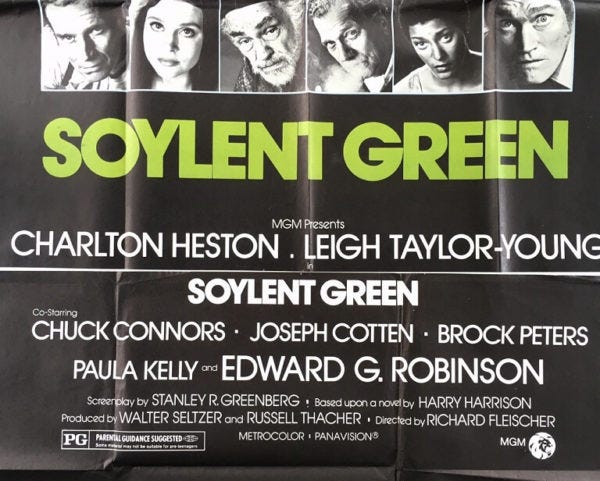
One might ask, how does something like the classic dystopian film Soylent Green promote connection when on its face it seems to be about how greed and control destroys? One view is that its impact is in reminding us the type of collaboration needed is not the one in the film’s twist. It is, rather, in the nature scene — reminding us that we are all part of the same whole. A desire for something more understandable.
In her book, Solnit artfully gives many examples of science, history, philosophy, and art that talk about interconnection and why it matters. It’s like you’re walking through a curated masterful garden that inspires you at every turn. I found myself taking my time with each chapter because the presentation of each concept was so profound.
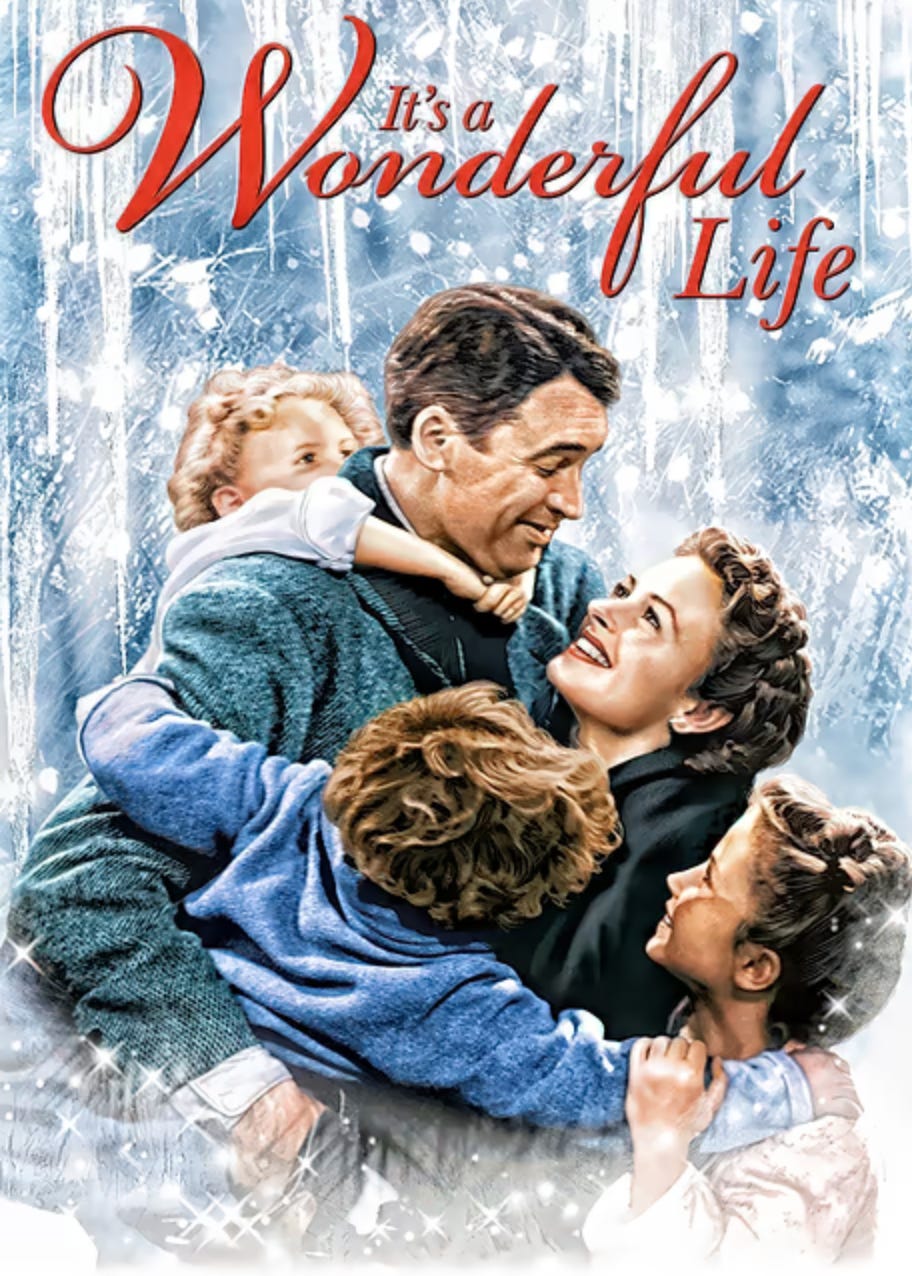
In her TED talk, Doran talks about the inspirational film It’s a Wonderful Life and how it really doesn’t end with a grand accomplishment, like so many like to remember. Instead, it ends on a recognition of connection.
Says Doran, “George Bailey has returned from the depths of despair. The angel says to him, ‘No man is a failure who has friends.’”
While there are many problems in the world, one truth remains, that art can heal us. It brings to us histories, places, peoples, and what they care about. We often are reminded of things that have gone on before, and that history has a long tail. Change is incremental, and when viewed from this retrospective truthfulness, it can be illuminating. So many on this planet are striving for goodness.
In Solnit’s chapter called Winged Seeds, she says that “you do not have to picture the destination to reach it or at least draw closer to it, you just need to choose a direction and keep on walking.”
If we pick the direction of truth and illumination, then we’ll be on the right course.